
Imagine trying to join a massive global conversation where no one has a phone book. You don’t know who is talking, you don’t have a central directory, and if you connect to the wrong person, they might ignore you or worse, feed you false information. This is exactly the problem every new node faces when it tries to join a cryptocurrency network. The solution is called peer discovery.
Peer discovery is the invisible handshake that allows decentralized networks like Bitcoin and Ethereum to function. It is the process by which individual computers (nodes) find each other, verify their identities, and establish connections to form the mesh network that secures the blockchain. Without this mechanism, your wallet wouldn't know where to send transactions, and miners or validators couldn't agree on the state of the ledger. It is the foundational layer of trustless communication.
The Anatomy of a Node Connection
To understand how nodes find each other, we first need to look at what happens during a connection. In a peer-to-peer (P2P) system, there are no servers and no clients in the traditional sense. Every participant is both. When a node boots up, it needs to establish a reliable link with others to receive block data and broadcast transactions.
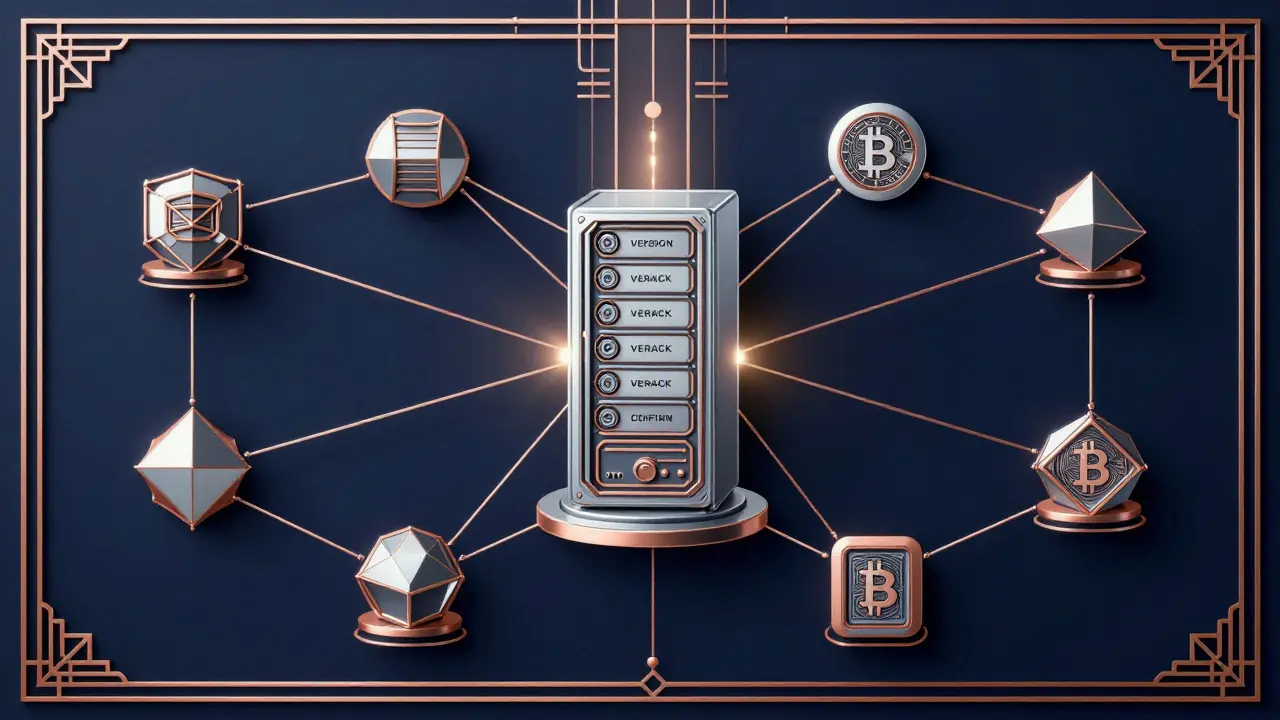
In the Bitcoin network, this process follows a strict protocol. Once a node identifies a potential peer’s IP address, it initiates a handshake. Here is the step-by-step flow:
- Version Message: The initiating node sends a
versionmessage containing its software version, current block height, services it supports, and a timestamp. This tells the remote node, "Here is who I am and what I know." - Version Response: The remote node replies with its own
versionmessage. - Verack Confirmation: Both nodes exchange
verackmessages. This stands for "version acknowledge." It confirms that the connection is officially established and ready for data exchange. - Address Request: After connecting, the node sends a
getaddrmessage. This asks the connected peer, "Who else do you know?" The peer responds with a list of IP addresses it has recently seen active.
This cascading effect is crucial. By asking one peer for more peers, a new node can rapidly map out a significant portion of the network topology without relying on any single source. To keep these connections alive, nodes send ping messages before 30 minutes of inactivity. If no response is received within 90 minutes, the node assumes the connection is dead and drops it.
Bitcoin’s Multi-Tiered Discovery Strategy
Bitcoin uses a layered approach to peer discovery designed for maximum resilience. It prioritizes decentralization while ensuring that new nodes can always find their way into the network, even if parts of it go offline. The system relies on three main methods, used in order of preference.
DNS Seeds are hardcoded domain names maintained by trusted community members that return lists of active Bitcoin node IP addresses. When a Bitcoin Core client starts for the first time, it queries these DNS seeds. These are not centralized servers controlled by a company; they are distributed across different operators worldwide. Some are dynamic, meaning they automatically scan the network for active nodes, while others are static and manually updated. Nodes typically listen on port 8333 for the mainnet or 18333 for testnet.
If the DNS seed queries fail-perhaps due to internet censorship or local firewall issues-the node falls back to Hardcoded Seed Nodes are specific IP addresses embedded directly into the Bitcoin client software as a last-resort backup. These are a small set of known-good nodes that have been running for years. They act as emergency anchors. Finally, users can manually configure trusted peers obtained from friends, forums, or community lists, though this is rare for average users.
Once a node connects to even one peer via DNS or hardcoded seeds, it shifts strategy. It begins requesting addresses from that peer and stores them locally. Over time, the node builds its own database of known peers, reducing its reliance on the initial seed sources. This minimizes load on the DNS seeds and distributes the discovery burden across the entire network. The client also tracks metrics like latency, reliability, and misbehavior scores for each peer, preferring stable connections over unstable ones.
Ethereum 2.0: Dynamic Discovery with Discv5
While Bitcoin focuses on stability and backward compatibility, Ethereum’s transition to Proof-of-Stake required a more flexible discovery mechanism. Ethereum 2.0 uses the Node Discovery Protocol v5 (discv5) is a UDP-based protocol that enables nodes to discover each other using cryptographic proofs and dynamic routing tables. Unlike Bitcoin’s TCP-based connections, discv5 operates over UDP, allowing for faster, lighter-weight queries that are essential for the high-frequency communication needed in a Proof-of-Stake validator network.
A key component of Ethereum’s system is the Ethereum Node Record (ENR) is a structured data object that contains a node's networking information, including its IP address, port, public key, and subnet membership. ENRs are constantly updated to reflect changes in the network. For example, a validator node might change its assigned subnet for attestation aggregation. The ENR captures this change, allowing other nodes to update their routing tables accordingly.
Discv5 uses a Kademlia-like distributed hash table (DHT) to organize nodes. This means nodes are arranged based on the distance between their unique identifiers. When a node wants to find others, it queries neighbors closest to a target ID. This creates a robust, self-healing network where nodes can quickly locate specific peers or broad groups of peers relevant to their role in consensus. Subnet membership is explicitly defined in the ENR’s attnets entry, ensuring that nodes only connect to peers necessary for their specific validation duties.
| Feature | Bitcoin (Core) | Ethereum 2.0 |
|---|---|---|
| Primary Protocol | TCP-based custom protocol | UDP-based discv5 |
| Initial Discovery Source | DNS Seeds & Hardcoded IPs | Bootnodes & DHT Lookup |
| Data Structure | Local Address Database | Ethereum Node Records (ENR) |
| Consensus Model Context | Proof-of-Work (Mining) | Proof-of-Stake (Validation) |
| Connection Maintenance | Ping/Pong (30 min timeout) | Dynamic Routing Table Updates |
Security Risks: Eclipse Attacks and DoS
Peer discovery is not just about finding friends; it is about avoiding enemies. The most significant threat to this process is the Eclipse Attack is a malicious attempt to isolate a victim node by controlling all of its outgoing peer connections, feeding it false information. If an attacker can convince a node that only their malicious peers exist, they can hide transactions, delay blocks, or manipulate the view of the blockchain. This is particularly dangerous for smaller networks with fewer total nodes.
Bitcoin mitigates this by encouraging nodes to maintain multiple connections (typically 8-12) and by using diverse discovery sources. However, if a node is behind a NAT (Network Address Translation) firewall, it cannot accept incoming connections, making it harder to build a diverse peer set. Ethereum’s discv5 adds cryptographic signatures to ENRs, making it harder for attackers to spoof identities or inject fake nodes into the discovery process.
Denial-of-Service (DoS) attacks are another concern. An attacker could flood the discovery ports with garbage data to prevent legitimate nodes from connecting. Both networks implement rate limiting and reputation systems. If a peer behaves badly-sending invalid blocks or disconnecting frequently-it gets penalized or banned from the local address book. This ensures that the network remains resilient against spam and resource exhaustion.

Why Decentralized Discovery Matters
The design of peer discovery directly impacts the censorship resistance of the cryptocurrency. In a traditional banking system, if a government wants to freeze an account, it simply instructs the central server to block access. In a P2P network, there is no central server to instruct.
Because peer discovery is distributed, shutting down a few DNS seeds or bootnodes does not break the network. New nodes will still find peers through alternative paths. This resilience extends to transaction propagation. Even if some nodes are censored or blocked by ISPs, the remaining peers continue to relay transactions and blocks. This is why creators and merchants increasingly adopt crypto payments-to bypass third-party payment processors that can arbitrarily block funds.
However, this comes with trade-offs. Fully decentralized discovery can be slower and less efficient than centralized directories. Users running full nodes must dedicate bandwidth and storage to help others discover peers. Light wallets, which do not run full nodes, often rely on centralized APIs (like Infura or Alchemy) for connectivity, reintroducing a degree of centralization risk. Understanding this distinction is vital for anyone concerned about true financial sovereignty.
Future Directions: Privacy and Scale
As networks grow, peer discovery mechanisms must evolve. One major focus is privacy. Currently, discovering peers often reveals your IP address to the nodes you connect with. Future implementations may integrate onion routing or similar techniques to obscure node locations, protecting users from surveillance and targeted attacks.
Another challenge is scale. As Ethereum sharding progresses and Bitcoin Layer 2 solutions expand, the number of subnets and parallel chains increases. Discovery protocols must become smarter, helping nodes find only the peers relevant to their specific shard or rollup, rather than connecting to everyone. This reduces bandwidth usage and improves efficiency.
We are also seeing research into adaptive discovery algorithms that can detect and avoid malicious clusters in real-time. By analyzing traffic patterns and peer behavior, nodes could automatically reroute away from compromised areas of the network. These advancements will ensure that as cryptocurrencies mature, their underlying infrastructure remains secure, private, and truly decentralized.
What is the difference between a DNS seed and a bootstrap node?
A DNS seed is a domain name that resolves to a list of IP addresses of active nodes. It acts as a directory service. A bootstrap node (or seed node) is a specific, long-running node that is hardcoded into the client software. DNS seeds are dynamic and can change, while bootstrap nodes are static fallbacks used if DNS resolution fails.
Can I run a Bitcoin node without using DNS seeds?
Yes. You can manually specify trusted peers in your configuration file. However, this limits your initial connectivity. Most users rely on DNS seeds for convenience, but advanced users may prefer manual configuration to ensure they connect only to verified, high-quality nodes.
Why does Ethereum use UDP instead of TCP for discovery?
UDP is connectionless and lighter than TCP. This allows Ethereum nodes to perform rapid lookups and updates to their routing tables without the overhead of establishing full TCP handshakes for every discovery query. This speed is critical for the frequent state changes in a Proof-of-Stake network.
What is an eclipse attack in peer discovery?
An eclipse attack occurs when an attacker controls all the peer connections of a victim node. By isolating the victim, the attacker can feed it false information, such as hiding transactions or presenting a different view of the blockchain. This undermines the security guarantees of the network.
How do light wallets handle peer discovery?
Light wallets typically do not perform peer discovery themselves. Instead, they connect to centralized full-node providers (like Infura or Alchemy) via API. This introduces a trust assumption, as the user relies on the provider to give them accurate blockchain data.



Russ Fincham
July 14, 2026 AT 00:56Let's be real for a second. This entire comparison is missing the forest for the trees. Bitcoin's TCP model is bloated and archaic, designed by people who thought 'simple' meant 'inefficient'. Ethereum's move to UDP via discv5 isn't just a tweak; it's a necessary evolution for a network that actually needs to scale beyond a glorified gold ledger. The fact that Bitcoin still relies on hardcoded seeds in 2024 is a testament to its stagnation, not its resilience. You don't get decentralization by clinging to legacy infrastructure like a security blanket.
Erika Pozzetto
July 15, 2026 AT 22:08I must respectfully disagree with the notion that one approach is inherently superior without considering the specific consensus mechanisms involved. It is quite fascinating how Bitcoin’s reliance on DNS seeds provides a certain level of stability that perhaps outweighs the efficiency gains of Ethereum’s UDP-based discovery, especially when one considers the long-term reliability required for Proof-of-Work networks where nodes are often run by individuals rather than institutional validators who require high-frequency updates.
Linda Hilliard
July 16, 2026 AT 20:41Oh, please. If you're running a light wallet on Infura, you aren't part of the network, you're a consumer. :P True sovereignty requires running a full node and understanding the ENR structure. Most of you reading this probably can't even configure a firewall correctly, let alone manage subnet membership for attestation aggregation. Stop pretending your mobile app makes you decentralized. It doesn't. :D
Kat Barr
July 17, 2026 AT 14:27Wow!! This is such an interesting read!!! I never really thought about how my phone talks to other computers before buying coffee with crypto 🤯 It's wild to think there are invisible handshakes happening all the time! 😱 I feel so much smarter now! Thanks for sharing this knowledge bomb 💣🚀
Winston Lacewing
July 18, 2026 AT 15:30You guys are sleeping on the privacy implications here! 😡 Every time you connect to a peer, you're leaking your IP address to potential surveillance states! 🕵️♂️ It's disgusting how little attention is paid to onion routing integration in these protocols. We need to demand better privacy standards NOW or we're all just walking into a digital panopticon! 😤🔒
Anuj Kashyap
July 19, 2026 AT 07:24The irony is palpable. We built systems to remove trust from human institutions, only to replace them with trust in cryptographic proofs and algorithmic routing tables. Is it truly freedom if your connection depends on a Kademlia DHT? Or have we just swapped the bank manager for a mathematician? 🤔💻
Kristine Lawson
July 20, 2026 AT 17:09It is absolutely absurd to suggest that Ethereum’s method is more secure simply because it uses UDP. In fact, the lack of stateful connections makes it far more susceptible to spoofing attacks if the cryptographic signatures are not implemented with extreme precision. One does not simply discard TCP’s reliability for speed without accepting significant trade-offs in data integrity verification during the initial handshake phase.
Tracy Marshall
July 21, 2026 AT 08:20don't believe the hype about decentralization they want you to think your node is safe but the dns seeds are controlled by the same elites who run the banks it's all a trap to track your transactions through ip leaks wake up sheeple
KEITH WONG
July 22, 2026 AT 15:35lol u guys overthink it. just run a node and chill. bitcoin works fine. eth is too complicated for most people anyway. keep it simple stupid 🙄
Shay Thomson
July 24, 2026 AT 14:15My goodness! The complexity of this underlying infrastructure is staggering! To think that our daily financial interactions rest upon such fragile, yet resilient, webs of connectivity is both terrifying and beautiful! It makes one wonder if we are truly ready for the responsibility of self-sovereignty!
Steven Briggs
July 24, 2026 AT 17:08i see what ur saying. pretty cool stuff.
Hamza k
July 26, 2026 AT 02:15Listen up, folks! The eclipse attack section is the real tea ☕. Imagine being cut off from the truth while everyone else moves forward. It’s a digital ghost town scenario! We need to stop treating peer discovery as a boring technicality and start seeing it as the frontline of censorship resistance. Your IP is your identity, guard it like your life depends on it-because in some regimes, it literally might! 🛡️🔥
Guy Davis
July 26, 2026 AT 04:34typical tech bro nonsense. nothing is truly decentralized until the gov stops caring. until then its just gambling.
Curtis Johnson
July 27, 2026 AT 10:39look i know this gets heated but lets try to find common ground here. both systems have their merits right? maybe we can appreciate the different approaches instead of tearing each other down. peace and love out there in the blockchain world ✌️