
Most people enter the crypto market chasing the next 100x moonshot, but that's a quick way to lose everything in a flash crash. By 2026, the wild west era of just buying random tokens has ended. We've entered a phase of institutional integration where professional asset management-not gambling-is the only way to survive long-term. The goal isn't just to own "different" coins, but to hold assets that don't all crash at the same time.
If you're still holding a portfolio that's 90% one single altcoin, you aren't diversifying; you're speculating. True Cryptocurrency Portfolio Diversification is about spreading your capital across market caps, technological sectors, and liquidity levels to capture growth while keeping a safety net. Whether you're a cautious saver or a risk-taker, your strategy needs to move from "picking winners" to "building a structure."
The Blueprint: Core and Satellite Allocation
The most effective way to organize your holdings is the "core and satellite" model. Think of your core as the foundation of a house-it's designed to keep the structure standing during a storm. The satellites are the decorative additions-they might not be essential, but they add significant value if they perform well.
Your core consists of Bitcoin is the primary store-of-value asset in the digital economy, acting as the market's gold standard and Ethereum is the leading smart-contract platform that enables decentralized applications and the majority of DeFi activity . These two typically make up 40-60% of a professional portfolio because they have the highest institutional adoption and liquidity.
The satellites are where you place your bets on emerging tech. This includes mid-cap projects and speculative small-caps. While the core provides stability, the satellites provide the "alpha"-the potential for returns that far exceed the market average. The trick is to keep the satellites small enough that a total loss doesn't wipe out your net worth.
Choosing Your Risk Profile
Not every investor has the same stomach for volatility. A retired professional and a 22-year-old developer shouldn't use the same allocation strategy. In 2026, we categorize these into three distinct paths.
| Asset Category | Conservative | Balanced | Aggressive |
|---|---|---|---|
| Bitcoin (BTC) | 50-60% | 35-45% | 25-35% |
| Ethereum (ETH) | 20-25% | 20-25% | 15-20% |
| Mid-Cap Altcoins | 10-15% | 20-25% | 25-30% |
| Small-Cap/Emerging | 0% | 5-10% | 10-20% |
| Stablecoins | 10% | 5-10% | 5-10% |
If you're in the conservative camp, you're basically treating crypto as a hedge. You want the safety of USDC and USDT (Stablecoins) to ensure you have cash ready to buy dips. For those going aggressive, the shift toward mid-caps is a bet that the ecosystem will expand beyond just the two biggest players.

Diversifying by Sector and Technology
A common mistake is buying five different coins that all do the same thing. If you own five different AI coins, you aren't diversified; you're just heavily exposed to the AI trend. If the AI bubble pops, all five assets will crash together. To fix this, you need sector diversification.
Consider spreading your holdings across these distinct functional areas:
- Layer 1 Protocols: These are the base-layer blockchains. Solana is a high-performance blockchain known for its extreme speed and low transaction costs and Cardano provide the infrastructure that other apps run on.
- Decentralized Finance (DeFi): Projects like Uniswap allow you to trade and lend without a bank. This sector moves based on financial utility.
- Real-World Assets (RWA): This is the big trend of 2026. RWA involves tokenizing physical assets like real estate or gold on the blockchain, bringing traditional finance into the digital realm.
- DePIN and AI: Decentralized Physical Infrastructure Networks (DePIN) merge hardware with blockchain, while AI protocols integrate machine learning. These are high-growth, high-risk "satellite" plays.
- Interoperability: Projects like Cosmos act as the glue, allowing different blockchains to talk to each other.
The Strategic Role of Stablecoins and Liquidity
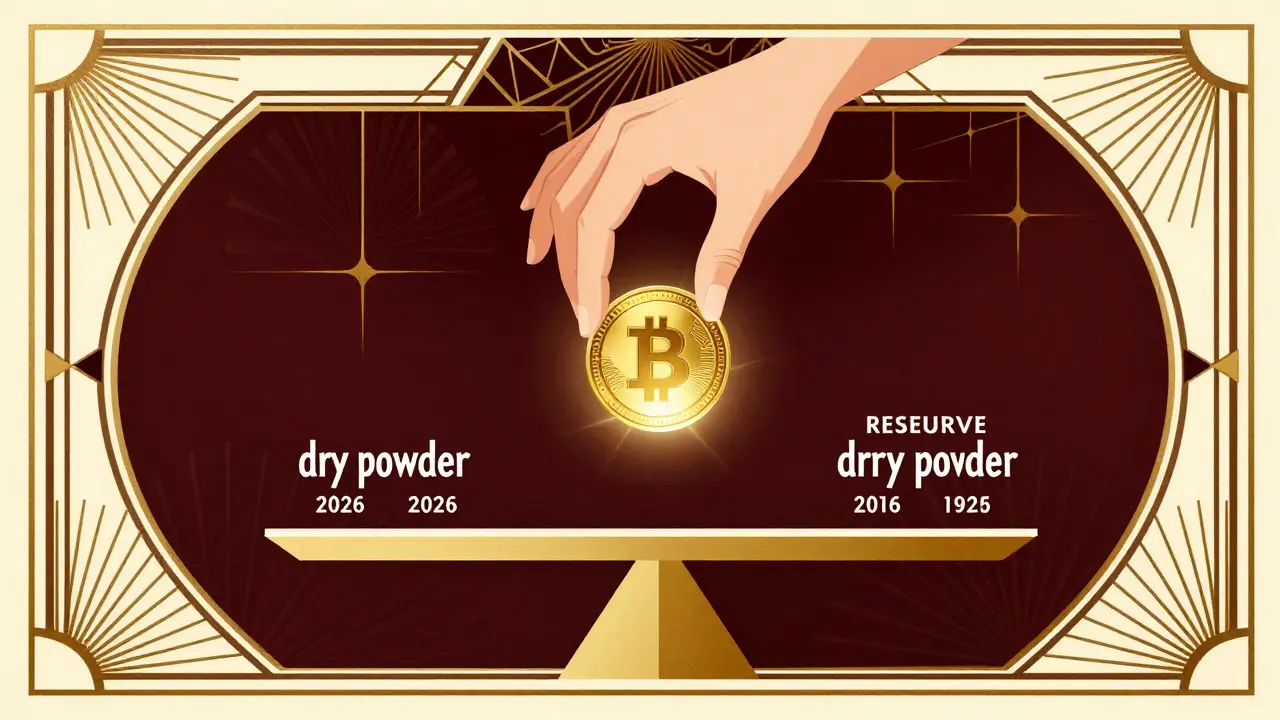
Stablecoins aren't just a place to park money; they're a tactical tool. In a volatile market, having 5-10% of your portfolio in stablecoins gives you "dry powder." When the market dips 20% in a day, the investors who are 100% invested can only watch. The diversified investor uses their stablecoin reserve to buy quality assets at a discount.
Liquidity management is about how fast you can exit a position without crashing the price. Bitcoin and Ethereum have massive liquidity. A small-cap AI coin might have very low liquidity, meaning if you try to sell a large amount quickly, you'll suffer from "slippage," where you get a much lower price than expected. Always balance your portfolio so that your most volatile assets are also the ones you can afford to hold the longest.
Using Crypto ETFs for Regulated Exposure
Not everyone wants to deal with the stress of private keys, seed phrases, and the fear of a hardware wallet getting lost. This is where Crypto ETFs are Exchange-Traded Funds that track the price of cryptocurrencies and are traded on traditional stock exchanges come in. By 2026, the SEC has approved numerous spot ETFs for assets like Solana and XRP.
ETFs allow you to get exposure to the price action of a coin without the custody risk. If you're a conservative investor, using an ETF for your Bitcoin and Ethereum core is a smart move. It integrates your crypto holdings with your traditional brokerage account, making tax reporting and estate planning much simpler.
Practical Steps to Implement Your Strategy
Stop guessing and start executing. Here is the systematic way to build and maintain your diversified portfolio:
- Determine Your Total Allocation: Decide what percentage of your total net worth goes into crypto. For most, 2-10% is the sweet spot.
- Pick Your Risk Profile: Are you Conservative, Balanced, or Aggressive? Use the table above to set your target percentages.
- Select Your Assets: Choose 5-15 assets across different sectors (Store of Value, Smart Contracts, DeFi, RWA, DePIN).
- Deploy via Dollar-Cost Averaging (DCA): Don't dump all your money in on a Tuesday. Spread your entries over 6 to 12 months to smooth out the price volatility.
- Set a Rebalancing Trigger: Don't rebalance on a calendar (like every January). Rebalance when an asset drifts 5-10% away from its target. If Bitcoin moons and suddenly becomes 80% of your portfolio, sell some to bring it back to your target and lock in profits.
Does diversifying actually guarantee I won't lose money?
No. Diversification reduces the risk that a single project's failure will wipe you out, but it doesn't protect you from a general market crash. If the entire crypto market drops 50%, most of your assets will likely follow, regardless of how diversified you are.
How many coins are too many?
Over-diversification is a real problem. If you own 50 different coins, you're basically just owning a low-fee index fund, and it becomes impossible to track the news for every project. For most retail investors, 5 to 15 carefully selected assets are enough to capture the market's growth without becoming a full-time analyst.
What is the safest way to enter the market for a beginner?
The safest approach is a combination of Bitcoin-heavy allocation (70-80%), a small amount of Ethereum, and a significant stablecoin reserve. Using regulated ETFs is also highly recommended for those who aren't comfortable managing their own digital wallets.
What are Real-World Assets (RWA) in a portfolio?
RWA tokens are digital representations of physical assets. Instead of just betting on a piece of software, you're betting on the blockchain's ability to manage ownership of things like real estate, treasury bills, or fine art. They add a layer of "tangible" value to a digital portfolio.
How often should I rebalance my crypto portfolio?
Avoid fixed schedules. Instead, use "threshold rebalancing." If your target for an asset was 10% but it grows to 15% due to a price surge, sell that extra 5% and redistribute it to underperforming assets. This forces you to sell high and buy low.


Greg Reynolds
April 26, 2026 AT 03:42The concept of a core-satellite model isn't exactly a revelation, as it's been a staple of traditional portfolio theory for decades. Furthermore, suggesting that BTC and ETH alone constitute a 'safe' core ignores the systemic correlation between the two assets during a liquidity crisis. Most people fail to realize that in a true black swan event, correlations tend to move toward one, rendering this specific form of diversification functionally useless.
Sara Ellis
April 26, 2026 AT 19:42money is just a shared dream anyway
Paige Raulerson
April 28, 2026 AT 17:29Imagine thinking that a simple table from a blog post is a 'strategy' for the elite. It's all a bit basic, isn't it? I've seen more sophisticated risk management in a lemonade stand. I wonder if the author even knows what actual institutional custody looks like or if they're just repeating buzzwords they found on a forum.
Jason M
April 30, 2026 AT 04:48This is such a fantastic way to break down a complex topic for newcomers! I absolutely love how the core and satellite analogy makes it accessible. For anyone struggling with the 'Aggressive' path, just remember that volatility is your friend if you have the time horizon to weather the storm. Let's all support each other in learning these tools so we can build generational wealth together!
Benjamin Forg
April 30, 2026 AT 20:53etfs are just traps for the masses so the blackrock vultures can control the keys while we sleep
Yvette P
May 1, 2026 AT 07:47Oh honey, the sheer audacity of calling a 10% stablecoin reserve 'dry powder' is just precious. In a real liquidity crunch, your slippage on those mid-caps will eat your 'diversification' for breakfast while you're busy staring at your pretty little RWA tokens. Let's be real, most people reading this are just longing for a moonshot and will ignore the rebalancing triggers the second a Twitter influencer mentions a new dog coin. The delta-neutral strategies used by actual hedge funds make this look like a child's piggy bank, but hey, keep dreaming about your 2-10% net worth allocation while the real whales manipulate the order books into oblivion. It's almost cute how we pretend the retail investor has any actual leverage in a market dominated by algorithmic high-frequency trading bots that can execute trades in nanoseconds while you're still trying to remember your seed phrase.
Eric Raines
May 3, 2026 AT 05:22I already do this but I just ignore the rebalancing part because I know when to hold. Everyone acts like a 5% drift is a crisis but it's actually a sign of strength in an asset.
Gloris Young
May 4, 2026 AT 15:02Good breakdown. Simple and clear.
Kyle Bush
May 6, 2026 AT 14:43USA TO THE MOON! 🇺🇸🚀 We're gonna lead the world in RWA and dominate every single chain! Let's get this bread! 💰💎🙌
Candace Sherrard
May 6, 2026 AT 18:44There is a certain poetic irony in trying to apply rigid structure to a market that was born from a desire to escape rigid structures. By creating these portfolios, we are essentially recreating the same financial silos we claimed to despise, yet perhaps that is the only way the human mind can process the chaos of decentralized value. It makes me wonder if we are truly diversifying our assets or simply diversifying our delusions of control in an unpredictable digital void.
praveen subbiah
May 8, 2026 AT 04:19India is becoming a powerhouse in blockchain development and our engineers will be the ones building these Layer 1s! So proud of the talent coming out of Bangalore! 🇮🇳✨
Liz Ariza
May 8, 2026 AT 07:42Love the vibe of this guide! 🌈 It's so refreshing to see a plan that isn't just 'buy and pray.' Keeping a little stablecoin stash is such a game changer for peace of mind 💖✨
jill huyo-a
May 9, 2026 AT 00:53I'm curious about how we can help newcomers implement the DCA strategy without them getting overwhelmed by the tools. Maybe we could collaborate on a simpler checklist for the 'Conservative' path?
Tara Aman
May 10, 2026 AT 16:20Yes! Let's do it! I'm totally down to help put together a beginner's guide for the conservative side!
Ellie Drews
May 12, 2026 AT 15:41This is a really helpful way to look at risk. It takes the emotion out of it and gives a clear path forward.
Mary Tawfall
May 14, 2026 AT 07:57I love how positive this approach is. It's all about sustainable growth rather than overnight riches!
Matthew Morse
May 15, 2026 AT 06:35why do people still use seed phrases when you can just use a managed account honestly it's just lazy at this point
debashish sahu
May 16, 2026 AT 19:07The mention of interoperability is quite important. Without the glue, these sectors remain isolated islands.