Have you ever stumbled upon a crypto token with a name that sounds promising but a market cap that looks like a typo? That’s exactly what happens when you look up CoinRadr, also known by its ticker symbol RADR. It’s listed on major trackers, yet it sits in the shadows of the crypto world. As of late 2025 and early 2026, RADR is a micro-cap utility token living on the BNB Smart Chain. It powers an app that promises to do everything from tracking your portfolio to alerting you about rug pulls. But does the reality match the hype?
If you are asking "what is CoinRadr," you aren't just looking for a definition. You want to know if this project is dead, if it's a scam, or if there's a hidden gem here. The short answer is complicated. The app exists, the token exists, but the trading activity is virtually non-existent. This article breaks down the facts, the features, and the red flags so you can make a smart decision.
The Core Concept: An All-in-One Crypto Tool
To understand the RADR token, you first need to understand what it’s supposed to do. In crypto terms, RADR is a utility token. This means it isn't designed to be a currency like Bitcoin or a store of value like Ethereum. Instead, it’s meant to give you access to specific features within the CoinRadr application.
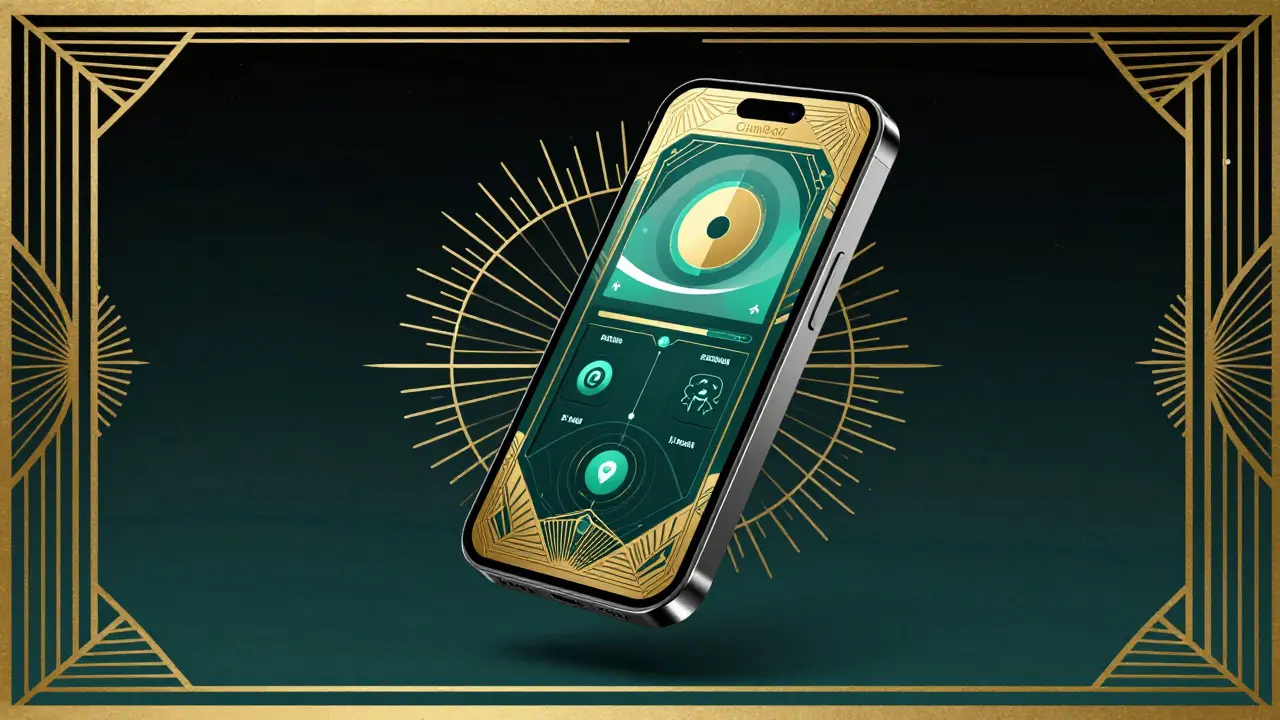
The CoinRadr app markets itself as an "all-in-one" solution for retail crypto users. Most people use separate apps for different tasks: one for checking prices, another for swapping tokens, and maybe a third for news. CoinRadr tries to bundle these into a single interface. Here is what they claim the app offers:
- Portfolio Tracking: Connect your wallets to see all your assets in one place.
- Market Data & Alerts: Get real-time updates on price movements.
- Risk Notifications: A unique feature called "whale alerts" that supposedly warns you about pump-and-dump schemes or potential rug pulls before they happen.
- In-App Swaps: A built-in browser for decentralized exchanges (dApps) lets you trade without leaving the app.
- Educational Content: Guides ranging from beginner basics to advanced trading strategies.
- Launchpad & Bots: Access to new token launches and automated trading signals.
The idea is appealing. Imagine getting a warning that a token you hold is being manipulated by whales right before the price crashes. However, while the feature list is impressive on paper, the execution and adoption tell a different story.
Tokenomics and Supply: What Are the Numbers?
When analyzing any crypto project, the numbers don't lie. Let’s look at the hard data for RADR. Unlike many projects that inflate their supply to sound bigger, CoinRadr has a fixed, capped supply.
| Metric | Value |
|---|---|
| Total Supply | 100,000,000 RADR |
| Circulating Supply | 100,000,000 RADR |
| Max Supply | 100,000,000 RADR |
| Network | BNB Smart Chain (BSC) |
| Contract Address | 0x71648f61d21d3c75b08414ffa817c4ac2157f89e |
| Number of Holders | ~973 (as of Dec 2025) |
A few things stand out here. First, the total supply equals the circulating supply. This means no more tokens can be minted. There is no inflationary pressure from new tokens entering the market. Second, the number of holders is incredibly low. Major cryptocurrencies have millions of holders. RADR has fewer than 1,000. This indicates extremely limited distribution and very little community engagement.
Price History and Liquidity Crisis
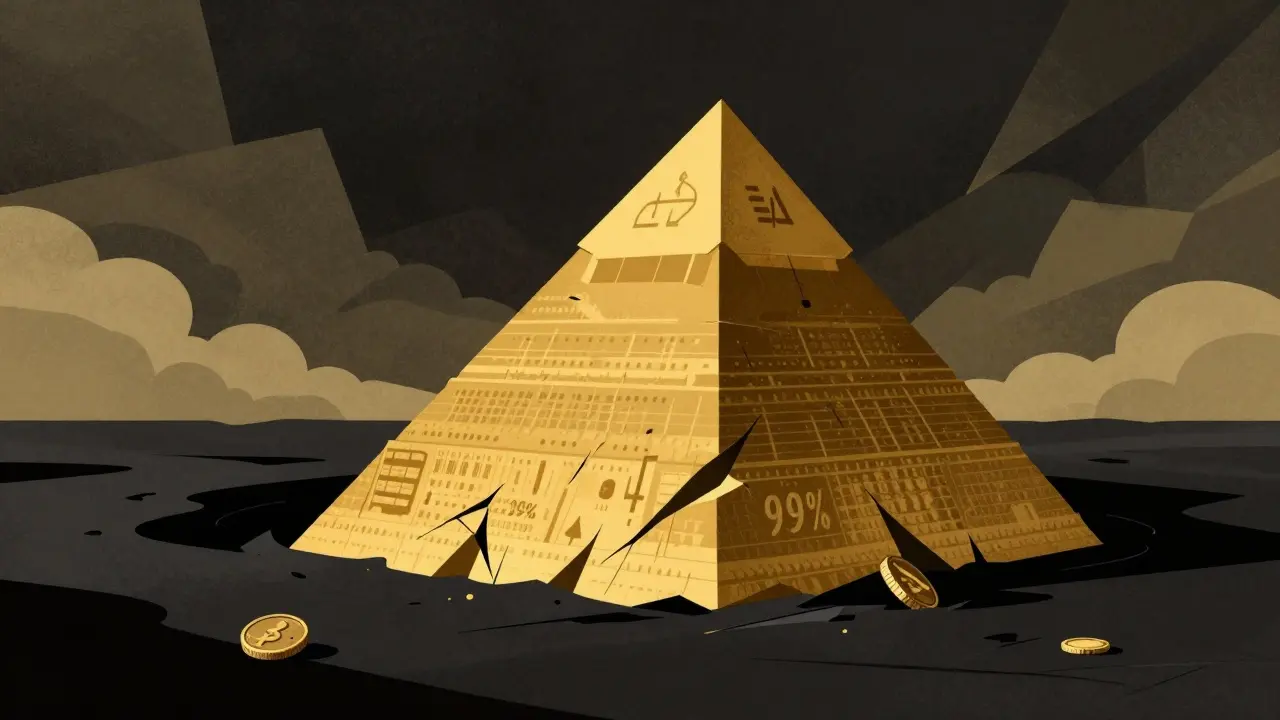
This is where the story gets concerning. If you check the price of RADR on aggregators like CoinMarketCap or LiveCoinWatch, you will see some startling figures. The token reached an all-time high (ATH) of roughly $0.017244 USD. Today, it trades around $0.000117 USD. That is a drop of over 99% from its peak.
But price drops happen in bear markets. The real issue is liquidity. Liquidity is the ability to buy or sell an asset quickly without affecting its price. For RADR, the 24-hour trading volume is consistently reported as $0 or "N/A" across multiple platforms. The fully diluted valuation (FDV) hovers around $11,690 USD. To put that in perspective, a single person could theoretically buy the entire market cap for less than the cost of a used car.
Why does this matter? Because if you try to sell a significant amount of RADR, there might not be anyone on the other side ready to buy. You could get stuck holding the bag. The lack of volume suggests that the secondary market for this token is effectively dormant. While Coinbase lists conversion rates for RADR into currencies like the Nigerian Naira or Euro, these are reference rates, not actual exchange listings. You cannot simply go to Coinbase and trade RADR like you would Bitcoin.
How Does It Compare to Other Trackers?
You might wonder, "Do I really need RADR for my portfolio tracking?" The truth is, the market for crypto trackers is crowded with giants that offer similar features for free. Let’s compare CoinRadr to some established players.
| Feature | CoinRadr (RADR) | CoinMarketCap App | CoinATMRadar |
|---|---|---|---|
| Portfolio Tracking | Yes | Yes | No |
| Market Data | Yes | Yes (45,000+ markets) | No |
| Rug Pull Alerts | Claimed Feature | No | No |
| Trading Bot Integration | Claimed Feature | No | No |
| User Base | Micro (<1k holders) | Massive (Millions) | Large |
| Utility Token | Yes (RADR) | No | No |
CoinMarketCap’s app is the industry standard. It tracks over 45,000 markets and has a massive user base. It doesn’t have a native utility token, but it’s reliable and widely trusted. CoinATMRadar serves a niche purpose: finding physical crypto ATMs. It’s specialized and effective.
CoinRadr tries to differentiate itself with those "advanced" features like whale alerts and trading bots. On paper, this sounds better. But without a large user base, the data feeding those alerts might be sparse. A warning system is only as good as the network monitoring the chain. With only 973 holders, how much data is CoinRadr actually analyzing?
Transparency and Team: Who Is Behind This?
In the crypto world, anonymity is common, but it increases risk. When you dig into the public information for CoinRadr, you hit a wall. Major aggregators like CoinMarketCap, LiveCoinWatch, and Crypto.com list the token’s price and contract address, but they do not list the names of the founders, the parent company, or a core development team.
There is no formal whitepaper linked in the primary listings. There is no detailed roadmap showing past milestones or future goals. There are no third-party security audits published for the smart contract. For a project that claims to protect users from rug pulls, the lack of transparency about its own structure is ironic.
This absence of information is a classic red flag for micro-cap tokens. It doesn't automatically mean it’s a scam, but it means you have no recourse if something goes wrong. If the developers abandon the project, who do you call? If the app stops working, where is the support team? Currently, there is no clear answer.

Technical Details: Using RADR on BNB Smart Chain
If you decide to proceed despite the risks, you need to know how to handle the token technically. RADR is a BEP-20 token on the BNB Smart Chain (BSC). This is important because it determines which wallets you can use.
- Wallet Compatibility: Since BSC is compatible with the Ethereum Virtual Machine (EVM), you can store RADR in any standard EVM wallet. Popular choices include MetaMask, Trust Wallet, and SafePal.
- Finding the Contract: Always double-check the contract address. The verified address for RADR is
0x71648f61d21d3c75b08414ffa817c4ac2157f89e. Scammers often create fake tokens with similar names. Never paste a contract address from a random website; verify it on CoinMarketCap or BscScan. - Viewing On-Chain Data: You can inspect the token’s history on BscScan, the official block explorer for BNB Smart Chain. By searching the contract address, you can see the exact holder distribution, transaction history, and even the source code if it’s verified.
Because there is no centralized exchange listing (like Binance or Coinbase Pro) for RADR, buying or selling likely requires using a decentralized exchange (DEX) like PancakeSwap. However, given the near-zero volume, slippage could be extreme. You might input a swap for $10 worth of RADR and end up receiving far less due to thin liquidity pools.
Is CoinRadr Worth Your Attention?
So, what is the verdict on CoinRadr? It occupies a strange space in the crypto ecosystem. It has a functional product-an app with ambitious features-but a token that appears economically dormant. The disconnect between the app’s promise and the token’s performance is stark.
For the average crypto user, the risks outweigh the benefits. You can get excellent portfolio tracking, market data, and educational content from established, free platforms like CoinMarketCap or CoinGecko. These platforms have millions of users, transparent teams, and robust infrastructure. They don’t require you to buy a risky micro-cap token to access their core features.
CoinRadr might appeal to a very specific type of investor: someone who believes strongly in the "early adopter" thesis and is willing to gamble on a project with almost no traction. If you think the "rug pull alert" feature is revolutionary and will eventually drive massive adoption, then RADR might have speculative upside. But remember, speculation is not investing. It’s gambling.
Before putting any money into RADR, ask yourself: Do I trust a team that hasn’t publicly identified itself? Am I comfortable with a token that has dropped 99% from its high and has zero daily volume? If the answer to either is no, it’s probably best to stick with the incumbents.
Where can I buy CoinRadr (RADR) tokens?
RADR is not listed on major centralized exchanges like Binance or Coinbase. To buy it, you typically need to use a decentralized exchange (DEX) on the BNB Smart Chain, such as PancakeSwap. You will need a compatible wallet (like MetaMask) funded with BNB to pay for gas fees and perform the swap. Be cautious of high slippage due to low liquidity.
Is CoinRadr a scam?
There is no definitive proof that CoinRadr is a scam, but it exhibits several high-risk characteristics common in fraudulent projects. These include an anonymous team, lack of third-party audits, extremely low liquidity, and a massive price drop from its all-time high. Always conduct your own due diligence and never invest more than you can afford to lose.
What is the maximum supply of RADR?
The maximum supply of CoinRadr (RADR) is fixed at 100,000,000 tokens. All of these tokens are currently in circulation, meaning there is no inflationary mechanism creating new tokens.
Does the CoinRadr app work without buying the token?
Based on general utility token models, basic features like portfolio tracking and market data viewing are often free. However, premium features such as advanced whale alerts, trading bot usage, or launchpad participation may require holding or spending RADR tokens. Check the app’s current pricing structure directly, as this can change.
Why is the trading volume for RADR zero?
A trading volume of zero indicates that there were no recorded trades on tracked exchanges during the reporting period. This is common for micro-cap tokens with illiquid markets. It suggests that very few people are actively buying or selling the token, making it difficult to enter or exit positions without significantly impacting the price.