
The New Way to Watch and Support Films
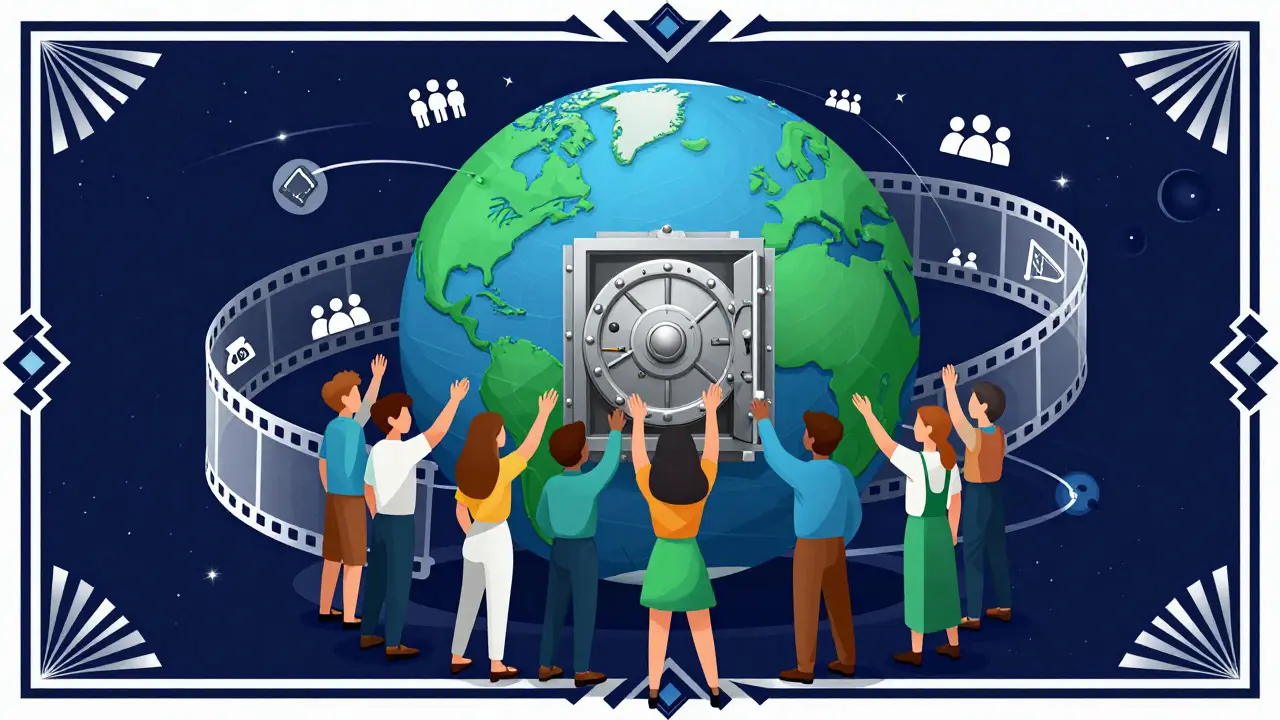
If you've ever wondered why independent films struggle to get seen while blockbusters dominate the box office, you're looking at the exact problem MovieBloc (MBL) tries to solve. Imagine a world where filmmakers don't need a studio executive to approve their script before it can even find an audience. That is the promise of this project. It isn't just another coin hoping to moon; it represents a functional ecosystem built on blockchain technology designed specifically for the entertainment industry.
MovieBloc acts as a decentralized platform where creators and consumers meet directly. This cuts out the traditional middlemen who usually take a massive cut of the revenue. By using a native utility token, the system creates a transparent economy for sharing digital content. In this guide, we break down exactly what the token does, who founded it, and whether it holds value for regular users or investors.
Understanding the Core Platform
To grasp the value here, you have to understand that it operates as both a marketplace and a token. The platform officially launched its service back in late 2019, transitioning from a simple idea into a fully functioning environment. Peter Kim, known for his work at Pandora.tv, founded the initiative after seeing gaps in the Korean streaming ecosystem. He noticed that creators lacked ownership rights over their content distribution.
The architecture moves away from centralized servers where a single company controls all the data. Instead, it relies on the Blockchain infrastructure. Specifically, the platform moved to run on the Ontology Mainnet. This choice matters because Ontology is known for speed and robust smart contract capabilities. Unlike some slower chains, this setup handles high volumes of transactions needed for real-time video streaming payments without lagging.
How the Token Functions
The MBL token is the fuel that runs this entire engine. It serves three main jobs within the ecosystem:
- Purchasing Content: Viewers use MBL to buy premium movies or unlock exclusive episodes. It replaces traditional credit card friction for international users.
- Creatives Compensation: When someone watches a film, the smart contract automatically distributes tokens to the director, actors, and editors. No paperwork, no waiting months for a payout check.
- Community Rewards: If you contribute subtitles, translate dialogue, or report illegal copies, you earn tokens. This crowdsources quality control and localization.
This mechanism changes the incentive structure completely. In a standard streaming deal, a platform keeps most of the subscription fee and pays creators a royalty later. Here, the transaction happens instantly on-chain. Every transfer is recorded publicly, meaning anyone can verify that a creator actually received their share of the watch fees.

Tech Stack and Security Features
Security is often the biggest worry when discussing digital currency assets. The underlying technology uses immutable ledgers. Once a transaction is confirmed on the chain, it cannot be altered or deleted. This prevents fraudulent activities like inflating view counts to fake popularity.
A key component here is the Smart Contract. These are self-executing codes with the terms of the agreement directly written into them. For example, if a filmmaker uploads a movie, the contract states: "For every view, 50% goes to the creator, 20% to the investor, 10% to the curator." The code enforces this split immediately upon viewing. There is no manager to override this decision. This transparency builds trust between strangers interacting in the marketplace.
The move to the Ontology network also enhanced interoperability. This means assets created on MovieBloc can potentially interact with other apps built on the same chain, allowing for greater liquidity and integration in the broader Web3 space.
Growth and Strategic Partnerships
Projects need more than just code; they need users. To accelerate adoption, the founders acquired Cobak, a Korean cryptocurrency community service, in 2020. This wasn't just about buying tech; it was about buying a user base already familiar with crypto wallets. Cobak provided wallet services, community tools, and real-time market updates essential for early adopters.
They also established MBL Media, a subsidiary focused purely on intellectual property. While the main platform hosts user-generated content, MBL Media actively develops animation and movie projects. This dual approach ensures there is professional-quality content filling the library alongside indie creations. It creates a bridge between mainstream Hollywood standards and decentralized distribution.
Current Market Data and Trading
For those interested in the financial side, the asset trades on major exchanges. You can access it through platforms like MEXC and Binance. As of recent market observations, the price fluctuates based on volume, often ranging around a fraction of a cent per token.
| Exchange Name | Access Type | Payment Options |
|---|---|---|
| MEXC | Spot / Futures | Credit Card, Crypto |
| Binance | Spot Pairs | Fiat Gateway, Stablecoins |

Lisa Miller
March 30, 2026 AT 21:32The concept of cutting out middlemen is appealing but execution is key.
I have been following similar projects in the Asian market for a while now.
Peter Kim’s background gives it some credibility regarding infrastructure.
Streamlining distribution usually hits friction points with older studios though.
We will see if the community rewards actually sustain the ecosystem long term.
Cara Boyer
April 1, 2026 AT 06:17Thes technolgies are dangerous for privacy :) . Big brothers like data more than art.
We trust the chain but who owns the chain eventually?
Security is claimed but history proves hacks happen to everything.
Be careful with your personal infomation on the platfom.
They say transperancy but who verifies the auditors?
Joy Crawford
April 2, 2026 AT 07:59i feel like this could change things for real indies :D . seeing smart contracts pay out instantly is so nice .
we dont have to wait months for checks anymore :( .
i wish more creators were using this already .
the translation rewards would help me earn something small too
it feels empowering to support artists directly without big corp tax .
i want to believe this works for everyone involved .
hopefully the community grows fast enough to keep it alive .
i am excited to buy my first ticket with MBL soon .
please tell me when you guys find good movies on there .
Callis MacEwan
April 4, 2026 AT 03:04Sentiment aside, the technical architecture relies heavily on Ontology interoperability.
This allows asset portability across the broader Web3 financial ecosystem.
Liquidity is critical if we expect institutional grade volume later.
Most chains fail due to lack of cross-chain compatibility protocols.
Their use case extends beyond simple viewing into NFT staking potentially.
Alex Lo
April 4, 2026 AT 21:07this is gonna explode in popularity soon !!!! . the speed on ontoliogy is way better then etheream .
people dont want lag when paying for hd video streams online .
i saw the coin on mexc and binance already listed .
wallet setups can be tricky for normal users tho .
still think the long term value will be huge for holders !!
Jay Starr
April 5, 2026 AT 06:02The hype cycle always overshadows the actual product viability unfortunately.
We have seen many entertainment tokens promise decentralization and fail.
However, the user base acquisition via Cobak was strategic.
I remain skeptical until mainstream non-crypto users adopt the wallet.
It is a fascinating experiment regardless of the final outcome.
Zackary Hogeboom
April 6, 2026 AT 13:27The integration with Ontology ensures high throughput for payment transactions.
Michael Nadeau
April 6, 2026 AT 16:56While the statement holds truth regarding throughput, one must consider the latency requirements for live streaming versus recorded content.
Ontology provides the necessary settlement layer for microtransactions essential in this model.
The philosophical shift here is moving value transfer from credit rails to blockchain rails.
This eliminates chargeback fraud risks inherent in fiat systems entirely.
Smart contracts execute terms without human bias or administrative overhead.
We observe a reduction in trust requirements between the viewer and creator significantly.
The immutability of the ledger ensures audit trails exist for every single view event.
This level of granularity allows for precise royalty distributions across multiple contributors.
Artistic compensation becomes transparent rather than opaque and delayed.
Cultural exchange benefits when barriers of currency conversion are removed completely.
We are witnessing a structural change in how intellectual property is monetized globally.
Matt Bridger
April 7, 2026 AT 21:07Mentioning governance without detailing the voting weight mechanics remains incomplete information for the average participant.
Tokenomics dictate power dynamics within the protocol itself.
Investors should read the whitepaper thoroughly before entering positions blindly.
Regulatory uncertainty looms over all crypto-based media ventures currently.
Raymond K
April 8, 2026 AT 11:57That is a very important point regarding the governance aspect of the system.
I found the explanation about voting rights quite helpful in understanding ownership stakes.
We need clear rules on how proposals are passed within the DAO structure.
Community safety nets are vital for preventing malicious proposals from passing quickly.
Everyone deserves to know how their voice impacts the future roadmap decisions.
Shaira Vargas
April 8, 2026 AT 17:17i think it sounds cool but im scared of losing money in wallets lol .
my grandma cant use this stuff so its hard to share .
but the idea that actors get paid directly makes sense to me .
maybe one day everyone will have a crypto pocket device .
until then im stuck waiting for better tech solutions to come around.
Tiffany Selchow
April 10, 2026 AT 01:33You worry too much about old people who refuse technology anyway .
Progress requires sacrifices from those unwilling to learn new systems .
Traditional studios lose jobs because they resist innovation constantly .
These coins reward the people willing to adapt to the new economy .
Stop acting like a victim of change instead of an agent.
Elizabeth Akers
April 10, 2026 AT 07:44just curious about the international subtitle crowdsourcing part mentioned .
seems like a great way to learn languages while earning tokens .
i love finding hidden gem movies from korea or japan .
hope they keep the library updated with fresh releases regularly .
looks chill so far for anyone wanting to explore indie cinema .
Ronald Siggy
April 11, 2026 AT 12:22Language accessibility is indeed the strongest competitive advantage here for global reach.
Centralized platforms restrict content based on geography frequently.
This open model breaks down regional censorship and licensing walls effectively.
We need more initiatives prioritizing localization over profit margins.
The incentive structure aligns perfectly with volunteer labor motivations.
I strongly encourage users to contribute to the translation pool actively.
Addy Stearns
April 12, 2026 AT 00:12The fundamental issue with streaming today is ownership rights.
Traditional platforms hoard data like dragons guard gold.
Blockchain offers a ledger that cannot be tampered with easily.
Peter Kim saw the gaps in the Korean market first.
Now he brings it to a global decentralized network.
Smart contracts remove the human error element entirely.
Payments flow instantly without banking intermediaries slowing things down.
We see volatility in token prices despite utility growth.
That price fluctuation often scares traditional investors away.
However, utility adoption often decouples from speculation eventually.
Translators earning tokens creates a viral distribution loop.
Subtitles become available faster than any studio localization team.
Viewers gain access to indie films previously locked behind borders.
Creators finally get paid per view rather than ad revenue shares.
This shift represents a necessary evolution in media consumption models.
Jamie Riddell
April 13, 2026 AT 01:23That analysis sums up the core value proposition beautifully.
I agree that long term adoption matters more than short term charts.
We should focus on the artistic freedom it grants independent voices.
Thank you for taking the time to explain the structural benefits so clearly.
Lisa Miller
April 14, 2026 AT 05:42Exactly what I needed to read after scrolling through all the noise lately.
Hearing positive experiences from different angles helps build confidence.
I plan to set up a wallet next week to test the interface myself.
Hopefully the onboarding process is smooth for beginners like me.
Thanks for sharing your thoughts and insights on the community.